
3 Oil Painting Myths: Is Oil Paint Toxic? Clearing Up Common Beginner Concerns
Heads up: some of the links in this post are affiliate links, which means if you click through and buy something, I get a tiny commission — at zero extra cost to you. I only link stuff I actually use in my own studio or would genuinely recommend to another artist to buy. (Also, yep, I'm an Amazon Associate, so those purchases help too!)
Many art topics come with their fair share of bad advice, outdated information, and dubious “best practices.” And oil painting is no exception.
Just Google any question about oil paints and you’ll find a mountain of opinions mixed in with the facts. It can feel like a bit of a minefield trying to sort through it all – especially now with so much AI-generated content floating around.
One of the most common concerns beginners have is about safety.
Is Oil Paint Toxic?
Many beginners hear warnings about oil painting and assume the paints themselves are dangerous. In reality, most modern oil paints are quite safe to use. Understanding a few basic studio practices can remove most of the concerns people have about toxicity. The confusion usually comes from misunderstandings about solvents, pigments, and older studio practices.
So let me address three of the most common oil painting myths, in case any of these are concerns you’ve heard before.
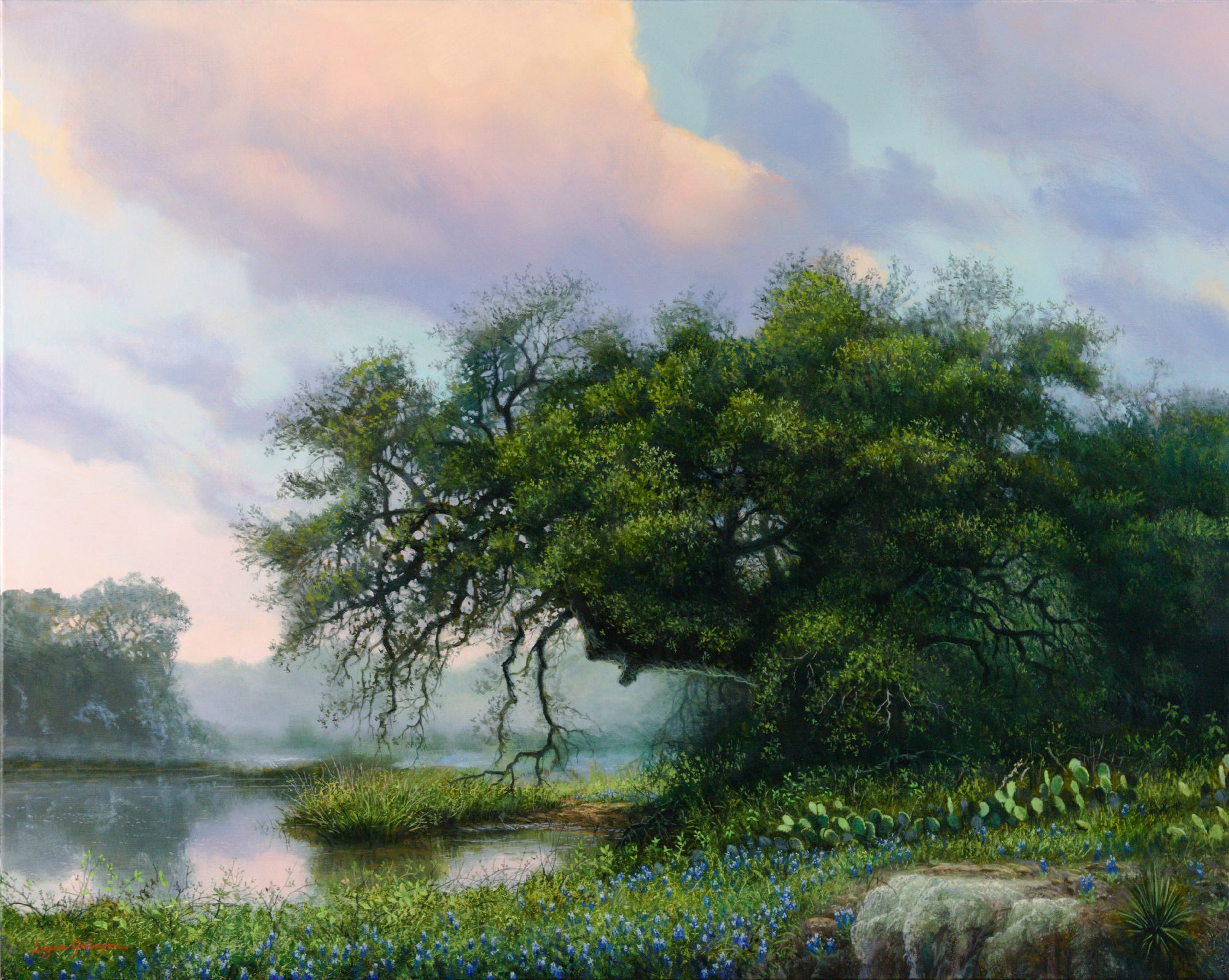
Myth #1: Oil Paint is Extremely Toxic
This is the number one concern I hear. You can argue, however, that many things are toxic or harmful if used inappropriately.
For example, many things under your kitchen sink, in your bathroom, or in your garage would be harmful if you used them in ways that they were never intended for. Or even plain ol' water. I'm not talking poisoned water, but drinking too much H2O. It's called hyponatremia. Drinking more water than your kidneys can handle is dangerous.
But let's talk about oil paints
Oil paint is plant, earth, or organic-based pigments suspended in highly refined plant oils, such as linseed or safflower oil. That's it. Pigment + plant oil.
They are not petroleum-based as some people think. Which is why they're safe to travel with on an airplane. (So it drives me crazy when I see people gluing themselves to famous oil paintings as a form of protest against fossil fuels. They're so uninformed.)
The oil colors we paint with are designed to be used safely by artists. As long as you use them as intended, you don't need to be concerned about toxicity.
Many people think of acrylics as the "safer" alternative. But according to Gamblin Colors, acrylics are more complex formulas of plastic, water, pigment, ammonia, and other chemicals. So yes, even acrylics contain chemicals that can be toxic if misused.
Using things as they're intended—and with common sense—is the key. And that goes for art supplies, too.
Heavy metal colors
The pigment exceptions are the heavy metal colors such as cadmiums, cobalts, etc. Yes, heavy metals are known to be toxic. However, you don't have to use any heavy metal colors if you don't want to. But if you do, just use common sense.
Cadmium red and other cadmium colors are unmatched (in my opinion) in color vibrancy and lightfastness. I use them daily, but again with common sense. I don't eat them. I don't rub them on my skin. And if I do get some on me, I immediately wash it off.
Truth be told, heavy metal toxicity is typically associated with an industrial setting. So unless you're sanding or air-brushing your paint, there are no air-borne particles to breathe in.
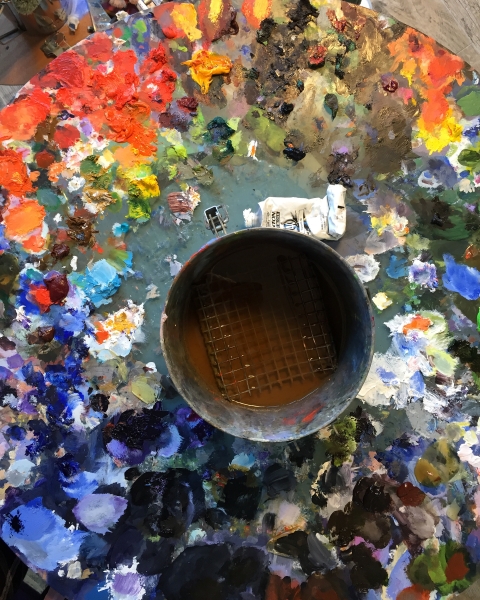
Lead-based colors
As many people know, lead was a real health concern in the past. We just didn't know the toxicity issues. Now we do. Some people now think that Van Gogh's neurological issues may have come from the bad habit he had of licking his used brushes. 😬😵🤢🥴🤮 So, DO NOT DO THAT!
The most common lead-based color is lead white (or flake white). But for most people and situations there are better alternatives.
Myself, I prefer Titanium White, which is better suited for landscape painting (in my humble opinion).
Solvents
As far as toxicity goes, the concern isn't actually from the paint, but the solvent you use to clean your brushes.
As you rinse the paint from your brush, you're typically stirring the brush in a container filled with solvent, which can produce some vapor. The traditional solvent was turpentine, a plant-based solvent that works great, but has a super-strong odor. (And I don't recommend using it.)
Luckily, other solvents—such as odorless mineral spirits (OMS)—are now available and are far less pungent and much safer. For instance, I've used Gamsol OMS, a very mild solvent for many years. The important thing when using any solvent is to have ventilation. And again, use common sense. If you're using a lot, open a window and use gloves. And yes, I do wear gloves during the imprimatura stage, the only time I use an OMS.
There's a difference between artist's solvents and those created for the industrial paint industry. That goes for paint as well. So while you may find something cheaper at the hardware store, I'd still advise using materials created for artists.
For my daily use, I'm a big proponent of organic solvents. I now primarily use a brush cleaner that's made from lavender. It's safe and non-toxic. And lavender has been used by artists for centuries.
There are also solvent-free alternatives, such as safflower oil. I explain how I use safflower oil to clean your brushes in the short video below. (I don't use safflower oil as a medium, only to clean my brushes.)
Here’s how I personally handle solvents in the studio. While I’m painting, I usually wipe my brush rather than constantly rinsing it in solvent. If I’m switching to a completely different color, I’ll simply use a clean brush. I mostly save the solvent for the end of the painting session when it’s time to clean my brushes, and I keep the container covered when it’s not in use.
With a few simple habits like these, oil painting can be a very safe and enjoyable process.
Let’s look at another myth that discourages many beginners.
Myth #2: Oils Take Too Long to Dry
I actually laugh at this one with fond memories. It falls into the category of "you don't know what you don't know."
I first started painting as a kid with Craftint oil paints. And I flailed around because learning resources were light-years less than what we have today. But I do remember using straight linseed oil to blend with. And it took forever to dry.
Why? Well, oil paint already has oil in it (it's the binder), and when you add a slow drying medium to the mix, such as linseed oil, that will slow the drying time even more. On top of that, certain colors take even longer to dry, such as Alizarin Crimson. And of course, the thicker the paint, the slower the drying.
By the way, oil paint doesn't actually dry (evaporation) – it cures (oxidization). So there is no “off-gassing” with oils.
Now I know a lot more about mediums and, in fact, there are several that can speed the drying time substantially. When you use a drying medium – like Liquin – your paint is typically dry the next day. And it doesn't take much.
One of the reasons oil paintings can dry faster (or slower) than many people expect is the use of mediums. I explain this in more detail in this post: why you should use mediums in oil painting.
These mediums made it possible for me to return to oil painting, even when I was working on tight deadlines.
And guess what? If you've ever tried to blend a perfect sky, you know what a huge advantage the slower drying time is! #blendability
Myth #3: Oil Painting is the Most Difficult to Learn
This is the one that makes me the saddest because I believe it's NOT true.
I painted extensively in acrylics for many, many years. And I painted for years in watercolor (my first four children's picture books were in watercolor).
But I originally learned to paint with oils.
I switched to acrylics simply for convenience, since as a kid my "studio" was my bedroom. Not having to deal with (or smell) turpentine was so much better, both at home and school.
Over the years I think I got pretty good with acrylics. However, I eventually realized that I was trying to mimic oil painting with my acrylics. With my watercolors, too.
So I went back to oils.
The blendability of oils is unmatched. The luscious, butteriness of the paint is a real joy to work with. 💜
For me, it seemed it was always a battle with other media to get the results I was easily able to get with oils.
Acrylics dried sooo fast. The edges tended to be harsher than I liked. The blends were not as smooth. The color shifted as the paint dried.
Watercolors were beautiful... until they misbehaved and areas of a painting had to be completely repainted. :-(
Yes, I know there are workarounds and I used them. But I finally realized, that if I was actually trying to paint in an oil style...
Why not just USE OILS? (Duh!)
If you've never painted in oils it's hard to describe how different they are to paint with. How wonderful they are.
Many beginners assume oils are the most difficult painting medium to learn. In reality, once you understand a few things, oils are actually easier to work with because the paint stays wet longer and allows more time for blending and adjustments.
If you’d like to understand the differences more clearly, I explain them in the video below.
Muddy colors
One of the most common complaints I hear from painters early in their journey is "my colors are getting muddy!"
Muddy colors can happen for several reasons. Over-blending is a common mistake. Blending colors that are near opposites on the color wheel can be another. Painting wet-on-wet (without experience) is another.
Practice can obviously remedy these issues, but using another painting approach can alleviate many problems. Read on...
Painting in one layer... or multiple
Painting everything in one layer (or in one sitting) typically involves a thicker application of paint. This is the style of painting Bob Ross used, and it can be very unforgiving, especially for a beginner. Whether you're a fan of Bob Ross or not, trying to paint fast with a lot of wet paint can be a recipe for disaster (e.g. muddy colors).
Personally, I favor a more classical, multi-layered approach. Which basically means painting an area and letting it dry. Then coming back, again and again, to build up textures and nuanced colors. By letting the layers dry in between painting sessions, you can avoid creating muddy blends. And it's a more relaxed experience.
This also means you can correct or change anything you like.
Each brush stroke doesn't have to be perfect.
Get it? You don't have to start all over if something doesn't go just right.
The Real Truth
Many of these myths discourage people from even trying oils. So I wanted you to know the real truth so you can experience the pleasure of painting with oils, too. Just remember:
Use common sense when painting with oils or any other paint and use them as intended. Don't eat them, don't rub them on your skin, and use ventilation when you use a solvent. And if you still have concerns, use an organic solvent, such as Chelsea Classical Studio's Lavender Brush Cleaner or artist grade safflower oil. Water mixable oils are also a great alternative.
Layers will dry in about 24 hours when you use a quick-drying medium, such as Liquin or other alkyd mediums. And there are solvent-free options as well. (Download my Mediums cheat sheet for more on the various types of mediums.)
In my humble opinion, painting in layers with oils can be the most forgiving and easiest way to learn AND the most enjoyable way to paint. 😉
This information is based on my own personal research and decades of painting experience. Please be sure to do your own research. A good place to start is Gamblin Colors' information on studio safety.
Where to Go From Here
Now that you’ve seen a few of the common myths about oil painting — and what’s actually true — you may be ready for the next step. And that’s learning the fundamentals.
Most beginners struggle not because they lack talent, but because they’ve never been shown a clear process for creating a painting from start to finish.
That’s exactly what I walk through in my free workshop, Secrets to Painting Beautiful, Realistic Landscapes.
In the workshop, you'll learn:
How professional artists ensure a successful painting – and it might surprise you
Two ways you can approach a landscape painting – and which one is much more forgiving for beginners
The key stages of a successful painting – so you don’t get overwhelmed and can actually finish your paintings
👉 You can watch the free workshop here.
When you understand the why behind the process, painting becomes a whole lot simpler – and a lot more enjoyable. And that's what it's all about!

Related Reading
4 Basic Rules for Easier Landscape Painting
Learn four simple rules that make painting realistic landscapes easier and clearer. Helping you simplify the process, improve depth, and avoid common beginner mistakes – no matter your painting style.


