Fat Over Lean — Oil Painting's #1 Rule
I'm not normally a "follow the rules" sorta guy. But if you’re painting in oils—or if you'd like to—there are a few important rules that will help you avoid potential problems down the road with your paintings.
After all, not only do you want to create a nice painting, but ideally, one that will survive time.
The good news is there are actually very few “rules” you need to follow when painting with oils.
#1 Rule: Fat Over Lean and Thick Over Thin
So, in the video below, let’s go over the most important rule that you need to understand: Fat Over Lean and Thick Over Thin. (These two are closely related so I think of them as one.)
I promise, it's not as scary as it sounds—I'll keep it as simple as I can!
Fat and Lean refers to the amount of oil in your paint, such as linseed oil, walnut oil, or poppy oil. In simple terms, Fat = more oil, and Lean = less oil.
So, Fat over Lean means your bottom layers should have less oil content, or be leaner, than subsequent layers.
Thick over Thin simply means don't paint thin layers over top of thick layers, since problems (like cracking) can occur when the thin layers dry quicker than the thick layers.
Another way to think of this rule is Flexible over Non-Flexible. Using a medium, such as Liquin, creates this flexibility within your layers.
Keeping it Simple
For me, painting in thin layers together with using a medium, helps to ensure I don't have to worry about this important rule. While the first layer is the leanest, I don't add "more fat" as I paint, I just paint. The process takes care of itself.
And between you and me, most of the oil painting “rules” you hear are typically just preferences, or opinions, with nothing to back them up. How can you tell the difference? Well, an actual "rule" will have some science behind it!
Take the Next Step
Understanding fat over lean is one of those foundational principles that quietly improves everything you paint. It helps your layers behave, your surfaces stay stable, and your process feel more intentional.
But it’s just one part of a bigger picture.
If you’d like to see how principles like this fit into a clear, step-by-step painting process — from the first toned canvas to the final refinements — I’d love to invite you to my free workshop:
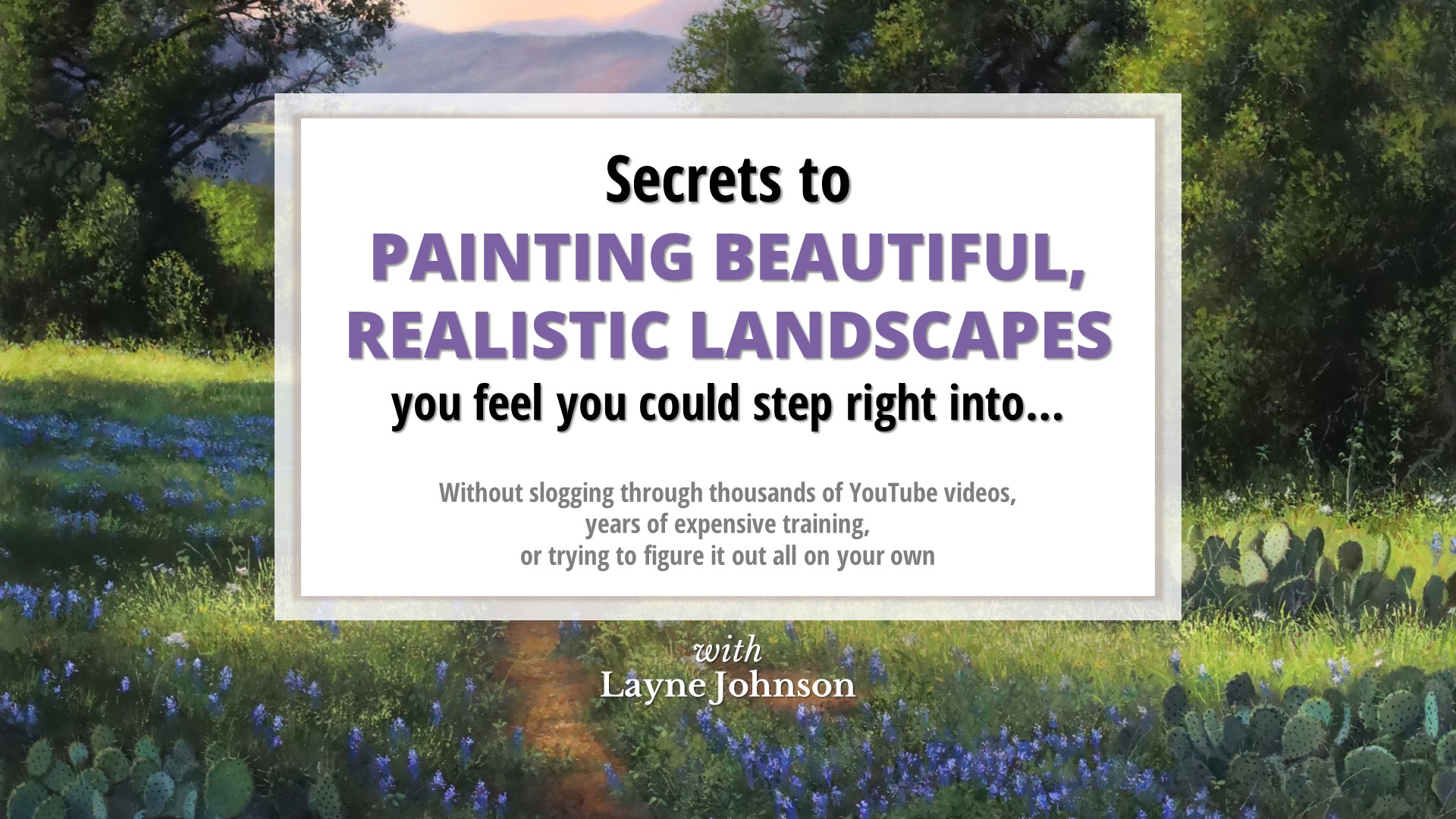
Secrets to Painting Beautiful, Realistic Landscapes
In it, I walk you through the structured approach I use in my own paintings — so you’re not guessing about order, materials, or technique.
👉 You can watch the free workshop here.
Because when you understand the why behind the process, painting becomes a whole lot simpler — and a lot more enjoyable.
Related Reading
Why You Should Use Mediums in Oil Painting
Oil painting mediums don’t have to be confusing. Learn what they do, when to use them, and how they improve drying time, flow, and paint handling.


